
What Commissions do Art Galleries Charge?
Typical art gallery commissions and how they are justified.
Part of our Art Buyers’ Questions, Answered series.
Intro
Almost every art gallery operates on a commission-based model. This means, that when they sell a piece of art, they keep a percentage of the sale for themselves, and the remainder goes to the artist who created the work. This model works because it allows both the gallery and the artist to enter into an agreement: neither party gets paid unless the gallery does its primary job, to sell the artist’s work.
Not all galleries are the same. Some do an extraordinary amount of work for a relatively small number of artists, thus justifying a high commission, while others take on higher volumes of artists and do not dedicate as much time to each artist, thus taking a lower one. In seeking gallery representation, artists need to figure out what their ambitions and needs are from a commercial perspective, to understand what type of gallery relationship will best suit them.
In this article we outline the rough range of commissions that galleries charge, what these funds go towards, and why artists do (or do not) consider it justified.
Table of Contents
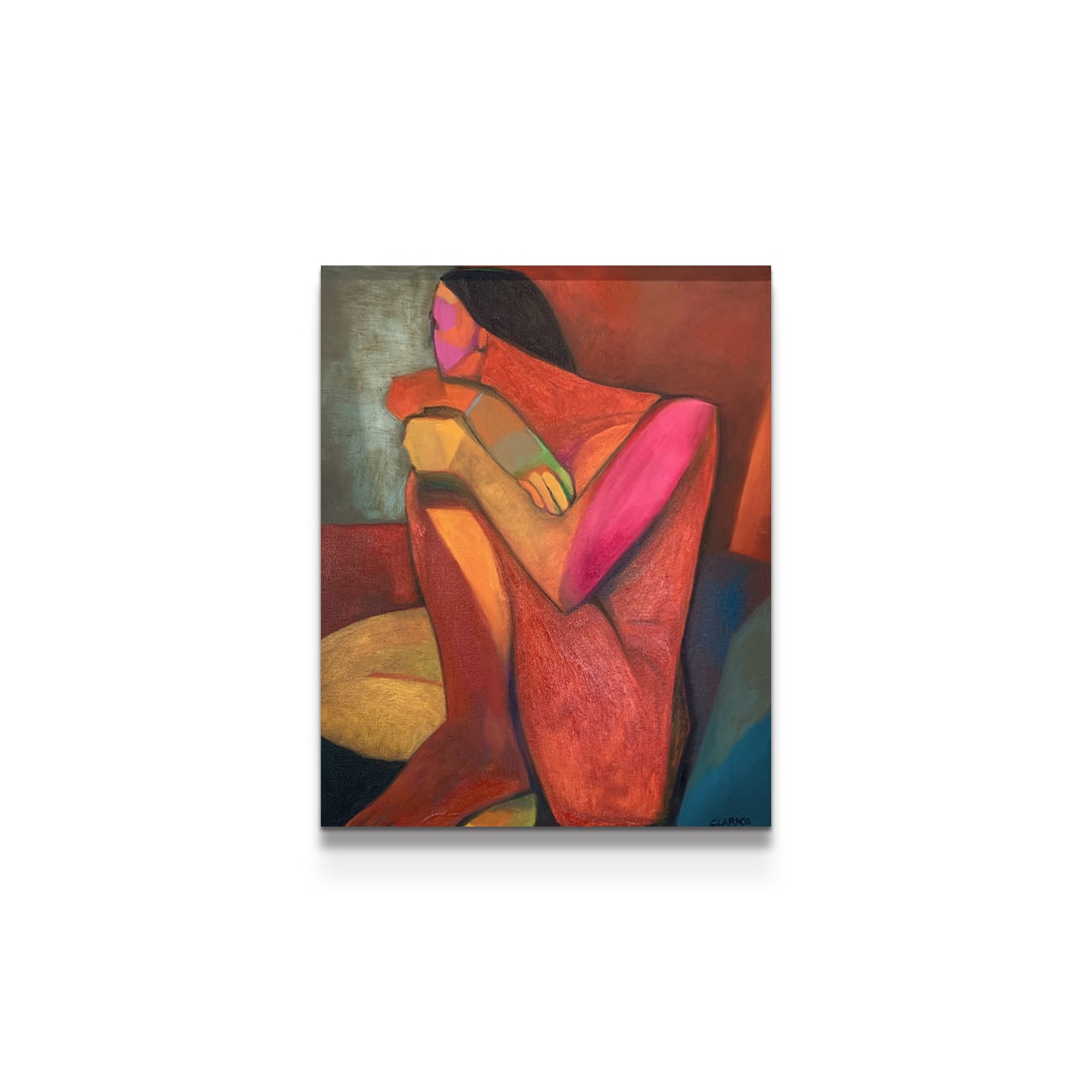
Artwork by Tyrrell Clarke
So, What Are Some Typical Commissions?
Typical commission rates for art galleries range anywhere between 30% and 60%, with the industry average being 50%. So, for the average gallery charging a 50% commission, if they sell an artwork valued at $1,000, the artist gets $500, and the gallery keeps $500. Simple stuff!
Traditional physical galleries tend to live in the 50%-60% commission range, while online galleries tend to live in the 30%-40% range.
Since online galleries don’t pay rent and tend to require fewer employees (these are the top two expenses for physical galleries), they have lower overhead and are thus able to get away with a lower commission. Within the ranges above, online and physical galleries select their commission rates based on the amount of work or extent of services they provide for their artists, and the relative prestige of their gallery (more prestige = higher commission).

Artwork by Chelsea Brant
Those Commissions Seem High! How Do You Justify It?
Trust Us… The Gallery Business is NOT a Cakewalk
To most artists and art industry regulars, the numbers given above are widely accepted. Commissions within that range do not come as a surprise. To those newer to the art world, these commissions seem astronomical. On the surface, it might seem spectacularly unfair that a gallery would keep HALF of the sale value of a piece of art that someone else created. It can feel especially exploitative given the façade that galleries put on of being highly successful and living a luxurious lifestyle (galleries are excellent marketers), while artists are generally perceived as struggling and poor.
We are (obviously) biased, but in almost all cases, we believe that these commissions are completely justified.
An exhaustive (although admittedly, old) survey of 8,000 commercial art galleries across the USA, Germany, and the UK, completed in 2014, found that 30% of these galleries reported negative average profits, with margins between -1% and -20%. Another 30% reported 0% – 10% profit margins, 22% reported 11-20% profit margins, and 18% reported over 20% profit margins. This is summarized in the chart below.
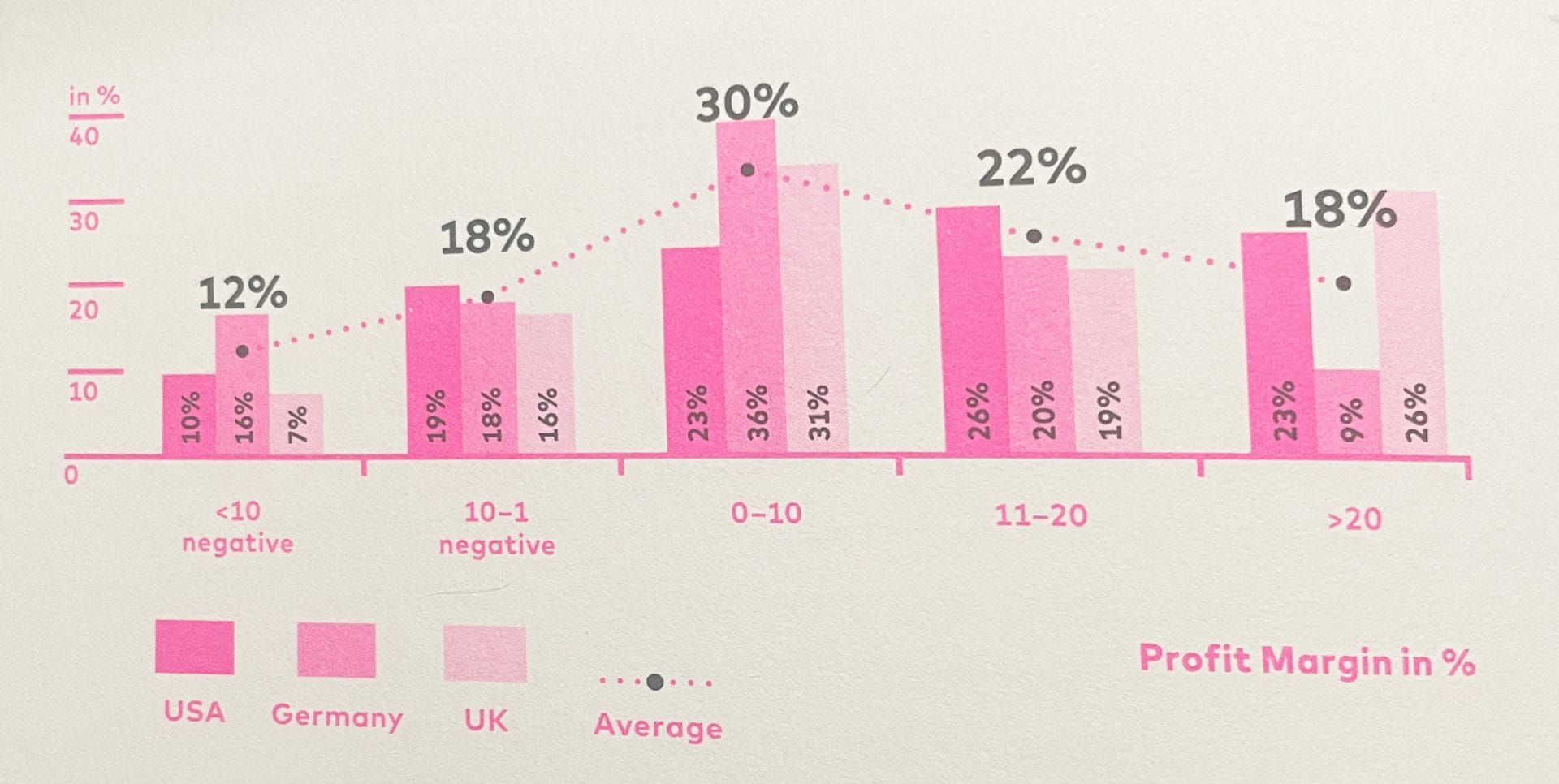
From the book, Management of Art Galleries by Magnus Resch
In other words, 30% of galleries are operating at a loss, 30% are barely squeaking by, and about 40% are profitable. The galleries that are profitable tend to be those working with the most coveted artists, in the upper echelon of the art world. The rest are fighting to survive.
What then—you might ask—causes gallerists to pick such a cutthroat line of business? The faint allure of riches and prestige looms in the background, sure, but what fuels them through the day-to-day grind is generally passion. Gallerists believe in their artists, working tirelessly to bring exposure to work they feel deserves it.
How Do Galleries Spend Their Earnings?
In our article on The Difference Between Art Dealers, Art Galleries, and Art Consultants, we lay out in detail what galleries do for artists. The main goal is to raise the profile of the artists they work with, through the following activities:
- Exhibition. Galleries present artists’ work in a curated (online or in-person) environment which complements the artwork and its thematic elements, and attracts an audience who connect with the gallery’s brand and past exhibitions.
- Prestige. Certain galleries with brand prestige immediately impart this on artists they choose to work with, by association—but this takes years of client nurturing and exhibition history to develop.
- Marketing & Outreach. Self-explanatory!
- Documentation. Similar to updating a CV with each career step, when artists have exhibitions and take on projects, they should be documented as part of their portfolio. Documentation includes visual mediums (photos, videos) along with written formats. Running an art gallery and documentation go hand-in-hand, as it is critical to have a “paper trail” which creates a sense of reliability both for artists and buyers.
- Guidance / Mentorship. With a broader understanding of the art market than most individual artists, art galleries can provide career guidance to the artists they work with. This might include critiquing artists’ work, helping them choose projects and shows, pricing, and much more.
- Professionalism. Some artists struggle with, or are disinterested in, handling invoicing, documentation, and client communication. Art galleries can act as a professional layer between artists and the public, allowing artists to focus on their work and clients to have a reliable experience when considering an art purchase.
All of the above is a full-time job, requiring rent, web hosting, software, and hardware costs, employees, marketing budgets, physical materials, and a LOT of hours. Some artists can take this list on themselves, and do it excellently—power to them! But many are not able to balance their art-making, the tasks above, and (quite often) another job to support themselves. When artists are deciding whether to pursue gallery representation, they must consider their time constraints and what they want to / have capacity to focus on.

Artwork by Jean Grady
A note on Vanity Galleries
It is HIGHLY UNCOMMON for galleries to ask artists to pay them to be included in their roster or their exhibitions. Those that do this are referred to as vanity galleries. Vanity galleries are generally not regarded as reputable and are often considered exploitative of artists, since they earn money from artists rather than selling work to the public.
Are Prices Higher at Galleries Than Buying Direct from Artists?
Since the goal of galleries is to raise the profile of their artists, a secondary goal is therefore to raise their price point—for as an artist becomes more coveted, their price point rises. Gallerists tend to have a strong sense of the market and can often advise artists on the highest prices they believe they can fetch.
When an artist goes from being independent to gallery represented, there is often a bump in their prices, at the behest of the gallery. At times, this helps artists justify the portion of sales they will no longer recover due to the gallery commission.
Because of the above, many people think of galleries as being a frustrating inflationary force in the art market. By adding a middleman, there are more mouths to feed, thus higher prices. This is… undeniably true. BUT, it doesn’t change the fact that galleries are a critical middleman in the art ecosystem, embraced by both artists and buyers. They are not likely to stop operating anytime soon, and there is no indication that gallery commissions are going down. If the starting prices for the most affordable physical galleries are outside your budget, consider looking at online galleries, which tend to have a lower price point. If online gallery prices are too high, visit local art and art school fairs, and/or try to connect with independent artists via social media.
Note that contacting a represented artist to bypass a gallery is unlikely to get you a better deal, as almost all galleries require price consistency with their represented artists, across any place their art is sold, to ensure fairness and prevent undercutting.